Car travel with an older dog is easier when the vehicle is set up before the dog is asked to climb in. The goal is not to pack every possible accessory. It is to choose a riding area, measure it, create a clean and usable surface, plan loading and unloading, and keep essential supplies within reach without confusing convenience gear with a crash restraint.
Quick Senior Dog Car Travel Checklist
| Before leaving | What to check |
|---|---|
| Dog and trip | Comfort with travel, current health, trip length, planned stops, and veterinary needs. |
| Riding area | Rear seat or cargo-area dimensions, headrests, console, seat split, doors, and usable floor space. |
| Surface | Flat placement, cleanable cover or pad, no loose folds, and no blocked seat hardware. |
| Loading | Stable route into the vehicle, enough room for a ramp or assisted lift if already used. |
| Supplies | Water, bowl, towels, waste bags, wipes, medication instructions, contact information, and a spare clean layer. |
| Stops | Check posture, breathing, temperature, hydration, cleanup needs, and willingness to continue. |
Start With the Dog and the Trip, Not the Gear
A short ride to a familiar location and a long road trip are different projects. Think about how long your dog can remain comfortable in one position, whether the dog can settle in a moving vehicle, and whether current pain, balance changes, medication, heat sensitivity, or illness make travel more complicated.
If travel is new, symptoms are changing, or the dog has a medical condition that may be affected by a long drive, ask your veterinarian what should change before the trip. A checklist can organize the vehicle, but it cannot decide whether a particular dog is medically ready to travel.
Choose the Riding Area and Measure It
Decide whether the rear bench or a suitable cargo area will be used before buying a cover or platform. Measure the usable width and depth, then note headrest positions, a center console, split-seat hinges, child-seat anchors, door shape, and any raised areas that could interfere with a flat setup.
Do not rely on labels such as “universal,” “SUV,” or “large.” Vehicle interiors vary widely. A product can be the right category and still be the wrong shape for one rear seat.
Create a Stable, Easy-to-Clean Surface
A cleanable layer can make mud, drool, hair, and small accidents easier to manage. A flexible seat cover mainly protects upholstery. A hard-bottom extender adds a rigid platform over part of the footwell. A washable or waterproof dog bed may add a familiar resting surface when it fits without creating unstable edges.
For dogs already using a waterproof dog bed or washable dog bed, compare its footprint with the vehicle area rather than forcing a full-size home bed into a cramped seat.
Plan Loading and Unloading Before the Trip
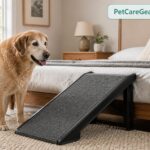
Do not wait until a busy parking lot to decide how the dog will enter the vehicle. If your dog already uses a dog ramp for senior dogs, verify that there is room to deploy it and that the landing area inside the vehicle is clear. If assisted standing or lifting is already part of daily care, the lifting-harness guide can provide mobility context.
A lifting harness is for assisted movement; it is not a vehicle restraint. Keep loading equipment and restraint decisions separate.
Keep Water, Cleanup Gear, and Essentials Reachable
Pack water where it can be reached without unloading the whole car. A familiar spill-proof water bowl may be easier than introducing a new travel system on departure day. Carry towels, waste bags, a spare clean layer, and any dog-specific supplies the trip requires.
For light surface messes, the published guides to dog grooming wipes and paw washers explain where those tools fit and where they do not. Neither should be used to cover up painful paws, wounds, or skin problems.
Protect Seats Without Treating a Cover as a Restraint
A rear-seat cover can protect upholstery and make cleanup easier. Hammock-style designs can also create a more enclosed surface around the bench. Those are interior and layout functions. They do not establish crash protection, and a seat-belt opening in the fabric does not certify any tether placed through it.
Choose a cover by measured fit, access to the vehicle features you actually use, cleanability, and how well the cover lies on the seat.
When a Hard-Bottom Back Seat Extender May Fit the Space Better
If the main problem is the open footwell between the front and rear seats, a rigid back seat extender is a different product category from a normal cover. Hard panels can create a larger, flatter platform, but fit depends on rear-seat width, footwell depth, console shape, door layout, and the exact product variant.
Manufacturer-listed load limits describe the product’s stated support capacity. They must not be interpreted as collision testing, braking protection, or a guarantee that a dog cannot fall or be injured.
What to Check During Stops
- Is the dog able to change position and settle again?
- Is breathing normal for that dog and the current temperature?
- Does the surface remain flat and dry?
- Has any cover, panel, strap, or edge shifted?
- Does the dog need water, a bathroom break, or cleanup?
- Is there new stiffness, reluctance to move, distress, vomiting, or weakness?
When to Pause the Trip and Call a Veterinarian
Stop the trip and seek veterinary guidance for collapse, breathing difficulty, repeated vomiting, severe or escalating distress, new inability to stand, significant pain, or another concerning change. Do not keep driving simply because the vehicle setup looks comfortable.
Final Pre-Departure Checklist
- Measure the actual riding area.
- Choose one clear passenger area and keep it uncluttered.
- Install the cover or platform before the dog enters.
- Check that seat hardware and doors still work as intended.
- Keep loading equipment ready before opening the door.
- Pack water, cleanup supplies, and a spare clean layer.
- Separate convenience gear from true restraint decisions.
- Plan stops based on the individual dog rather than a fixed universal interval.
Frequently Asked Questions
Does a dog car seat cover make travel safer?
A cover can protect upholstery and organize the rear-seat surface, but it is not a crash restraint and should not be described as collision protection.
Is a back seat extender the same as a dog hammock?
No. A soft hammock is mainly a flexible cover. A hard-bottom extender uses rigid panels to bridge part of the footwell and enlarge the platform. Some products combine both ideas, so inspect the construction rather than the product name alone.
Can I use a lifting harness as a car restraint?
No. A lifting harness is designed for assisted mobility. Do not assume it is suitable for crash restraint unless the exact product has separate evidence for that purpose.
Related Senior Dog Guides
- Best Dog Ramps for Senior Dogs
- Best Lifting Harnesses for Senior Dogs
- Best Waterproof Dog Beds for Older Dogs
- Best Washable Dog Beds for Senior Dogs
- Best Spill-Proof Water Bowls for Senior Dogs
- Best Paw Washers for Older Dogs
- Best Dog Grooming Wipes for Senior Dogs
- Best Dog Car Barriers for Older Dogs
- Best Dog Car Seat Covers for Older Dogs
Final Thoughts
A good senior-dog car setup is measured, simple, and easy to reset. Choose the riding area first, protect or extend the surface only when the product fits that space, prepare loading before departure, and keep health and true restraint decisions separate from convenience accessories.