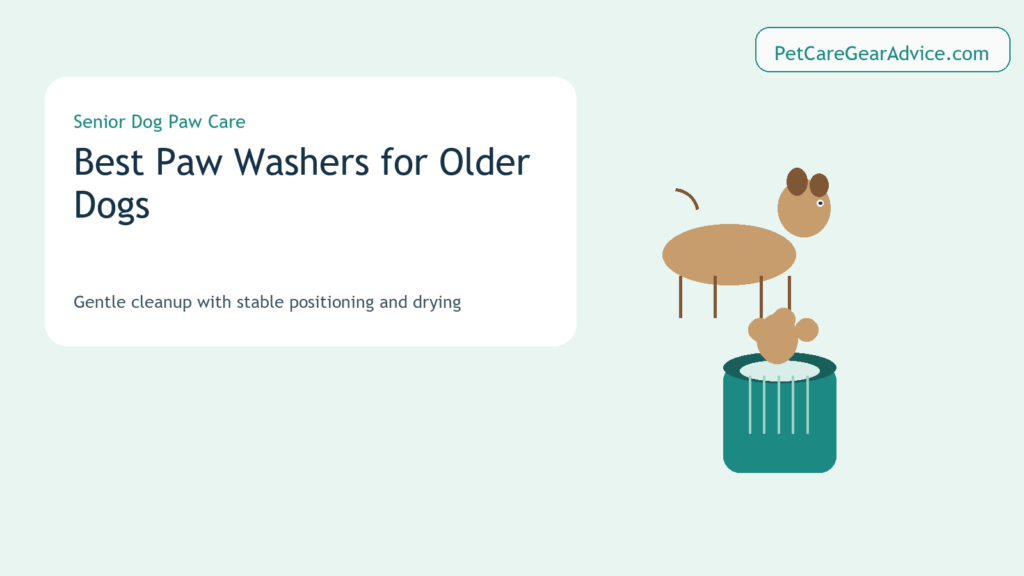
A paw washer can make post-walk cleanup more contained, but the tool should not require an older dog to balance awkwardly or tolerate a tight cup. The best option fits the paw, comes apart for cleaning, and leaves a routine that ends with careful drying.
Disclosure: As an Amazon Associate, PetCareGearAdvice.com may earn from qualifying purchases at no additional cost to you.
Quick Picks
| Pick | Format | Best use |
|---|---|---|
| Best Overall Cup | Water-filled silicone-bristle cup | Medium paws and muddy post-walk cleanup at a stable entryway station. |
| Best Handled Cup for Large Paws | Handled cup with silicone insert | Medium-to-large dogs when a handle may help the owner steady the cup. |
| Best Fragrance-Free Foam Brush | No-rinse foam with bristle applicator | Quick cleanup when carrying a water-filled cup is impractical. |
| Best Silicone-Brush Foam | No-rinse foam with silicone brush | Reaching around pads and between toes after ordinary walks. |
| Best Refillable Foam Option | No-rinse foam with removable scrubber | Owners who prefer a removable brush and refillable bottle format. |
How We Chose These Options
We re-ran six Amazon SearchItems queries and found 26 unique products. We replaced the provisional generic product with stronger branded options, then re-ran GetItems. All five final products returned in-stock DetailPageURLs and API images. We selected two water-cup formats and three no-rinse brush formats rather than filling the list with color variations of one cup.
- Paw-width fit: A cup must allow the paw to enter without compressing toes or dragging dewclaws.
- Stable handling: The owner should be able to hold the tool while the dog remains safely positioned.
- Removable parts: Silicone inserts and brush heads should come apart for rinsing and drying.
- Formula limits: No-rinse cleaners need pet-specific labels and should not be used as treatment.
- Thorough drying: Moisture between toes can be uncomfortable and needs attention after every cleanup.
Best Paw Washers for Older Dogs
1. Dexas MudBuster Medium Paw Cleaner – Best Overall Cup
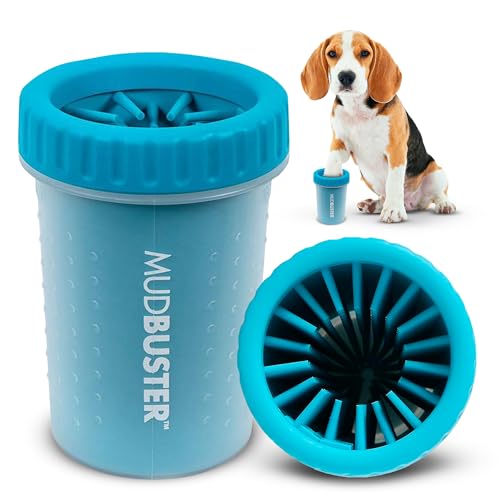
Why it stands out: The medium cup lists a 1.5-to-2.5-inch paw-width range, removable silicone bristles, and a simple fill, twist, rinse, and dry routine.
Best for: Medium paws and muddy post-walk cleanup at a stable entryway station.
Main caution: Measure paw width and do not force swollen or painful toes into the cup. Dry thoroughly after use.
2. Kabetig Paw Cleaner with Handle – Best Handled Cup for Large Paws

Why it stands out: The verified cup lists a 2.0-to-3.15-inch paw-width range, a side handle, removable silicone insert, and three towels.
Best for: Medium-to-large dogs when a handle may help the owner steady the cup.
Main caution: The handle does not stabilize the dog. Use a non-slip surface and stop if three-leg balance is unsafe.
3. Uproot Clean No-Rinse Paw Cleaner – Best Fragrance-Free Foam Brush

Why it stands out: This compact applicator dispenses no-rinse foam through a bristle brush and is listed as fragrance-free.
Best for: Quick cleanup when carrying a water-filled cup is impractical.
Main caution: Pet-safe and hypoallergenic claims are manufacturer-supplied. Patch-test and avoid broken or irritated skin.
4. Dandylion Clean Paws Foam – Best Silicone-Brush Foam

Why it stands out: The five-ounce bottle combines a foaming cleaner with a built-in silicone brush and a wipe-dry routine.
Best for: Reaching around pads and between toes after ordinary walks.
Main caution: Do not repeat claims that it cleans better than wipes or suits itchy paws. Stop for redness, pain, or persistent licking.
5. Gentle Creatures Magic Foam Paw Cleaner – Best Refillable Foam Option

Why it stands out: This five-ounce fragrance-free foam uses a detachable silicone scrubber, with refill pouches listed separately.
Best for: Owners who prefer a removable brush and refillable bottle format.
Main caution: Sensitive-skin and safety language is not independently verified. Use only on intact skin and dry the paw afterward.
Cup vs No-Rinse Foam
A water-filled cup can loosen mud around the whole paw, but it requires lifting the paw into an opening and carrying dirty water to a sink. A foam brush is compact and may be easier for small messes, but it adds a formula that must suit the dog and be wiped away as directed.
A simple damp towel remains a valid choice. Use a product only when it makes the routine easier without turning paw handling into a balance test.
Measure, Stabilize, Clean, and Dry
Measure the widest part of a weight-bearing paw and compare it with the exact listing. Set the dog on a stable non-slip rug. Keep the leg low, clean one paw at a time, and allow breaks between paws.
Rinse removable cup parts or brush heads, then dry them before reassembly. Towel the paw and separate the toes gently to check for trapped grit, redness, cuts, or swelling. The mobility checklist can help when three-leg balance is the main challenge.
What to Avoid
- Forcing a swollen, sore, or injured paw into a cup.
- Choosing a cup from breed labels without measuring paw width.
- Using medicated or human cleaners as routine paw wash.
- Leaving moisture between toes after cleaning.
- Claiming a paw washer prevents infection, treats skin disease, or prevents slipping.
Frequently Asked Questions
Do paw washer cups work for every older dog?
No. Dogs with painful paws, balance problems, or low handling tolerance may do better with a damp towel or professional guidance.
Should I add soap to a paw washer cup?
Use only what the cup and pet-product label permit. Plain lukewarm water is often enough for ordinary mud, while chemicals and medicated products need specific guidance.
How do I prevent wet paws from slipping?
Dry the paw thoroughly, especially between toes, and keep the dog on a stable surface before walking away.
Related Senior Dog Guides
- Senior Dog Mobility Checklist
- Best Non-Slip Rugs for Older Dogs
- Best Lifting Harnesses for Senior Dogs
- Best Washable Pee Pads for Senior Dogs
- Best Waterproof Couch Covers for Dogs
- Best Dog Grooming Wipes for Senior Dogs
Final Thoughts
Choose a paw washer only when it fits the paw and the dog can remain stable. A good routine is simple: clean gently, inspect the skin and nails, dry between the toes, and stop when a paw looks painful or irritated.