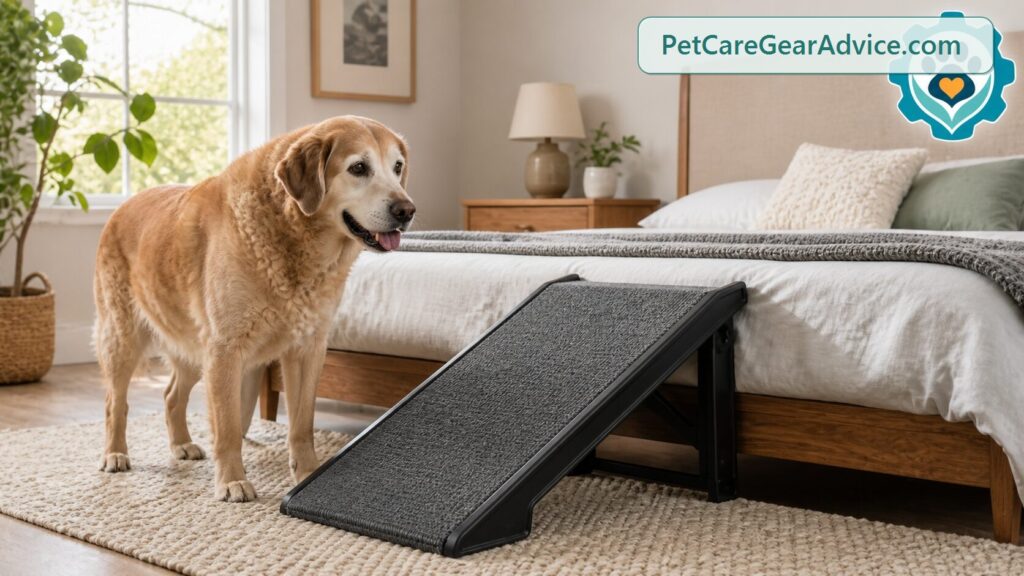
If your older dog can no longer get on the bed easily, it can feel worrying. One day your dog may jump up without thinking, and another day they may pause, hesitate, slip, or look at you for help.
This is common as dogs get older. Changes in strength, confidence, balance, eyesight, and joint comfort can all make bed access harder. The goal is not to force your dog to keep doing what they used to do. The goal is to make access easier, reduce unnecessary jumping, and create a safer setup around the bed.
This guide walks through practical steps you can take at home, including ramps, stairs, non-slip surfaces, lower resting options, and when it may be time to speak with your veterinarian.
Safety Note Before You Start
This article is for general informational purposes only and is not veterinary advice. If your dog is in pain, limping, falling, crying out, dragging a leg, suddenly refusing to jump or climb, or showing a major change in movement, consult your veterinarian.
Gear like ramps, stairs, rugs, and supportive beds may make daily movement easier for some older dogs, but they are not a medical solution. A sudden change in mobility should always be taken seriously.
Why Older Dogs Struggle to Get on the Bed
Older dogs may struggle with bed access for several reasons. Some dogs lose strength in their back legs. Some become less confident about jumping. Others may have joint sensitivity, balance changes, vision changes, or fear after slipping once.
The height of the bed also matters. A low couch may still be manageable, while a tall bed can feel intimidating. Hard flooring around the bed can make the problem worse because your dog may not feel secure when preparing to jump or land.
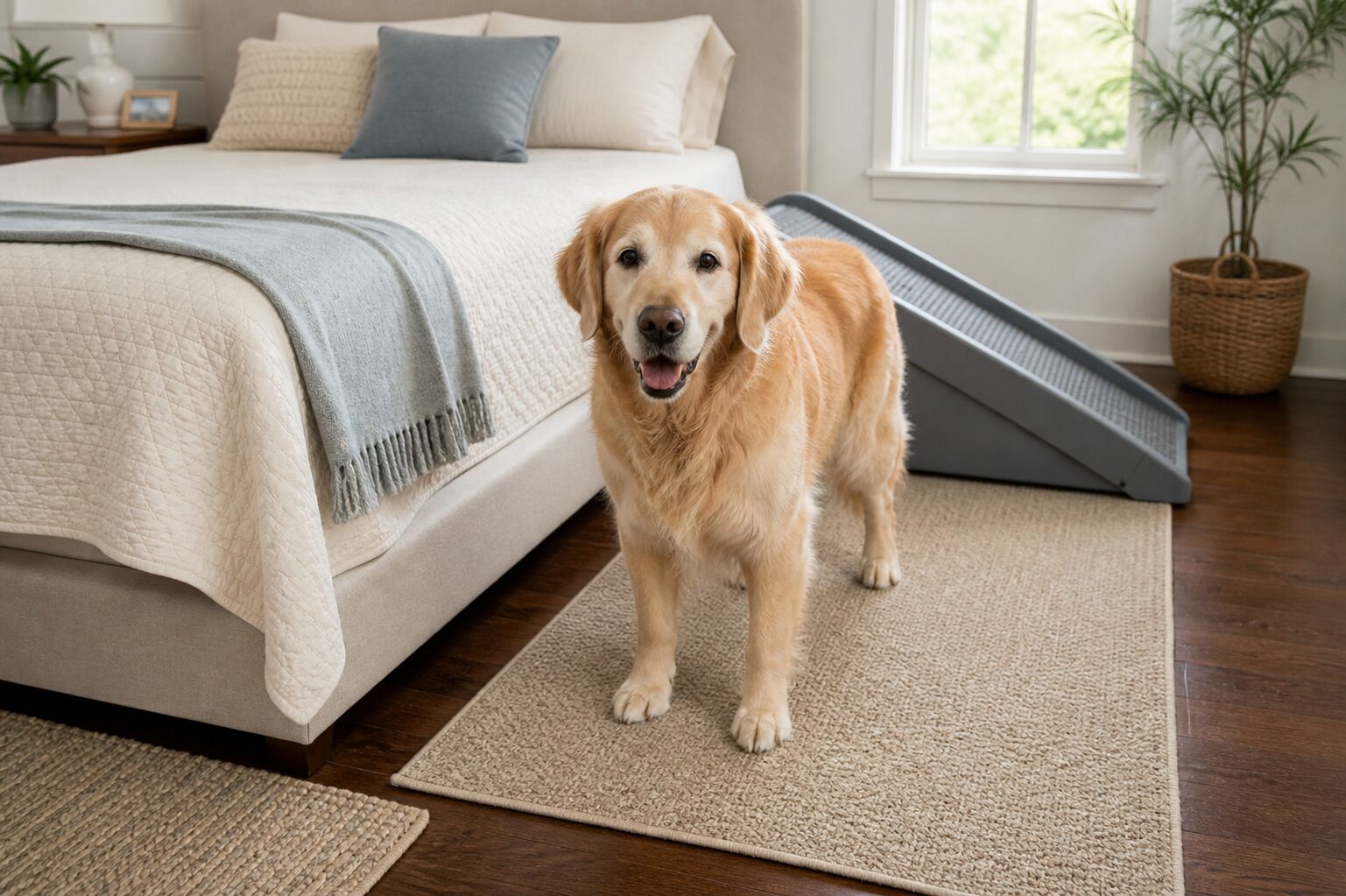
Common signs your older dog may need help include:
- Pausing before jumping onto the bed
- Trying several times before making the jump
- Slipping on the floor near the bed
- Jumping down but landing awkwardly
- Waiting for you to lift them
- Avoiding the bed even though they used to enjoy it
- Using furniture nearby as a stepping point
When you notice these signs, it is usually better to adjust the environment early instead of waiting until your dog becomes more hesitant.
Step 1: Stop Encouraging Big Jumps
If your dog is already struggling, try not to encourage repeated big jumps onto or off the bed. Even if your dog can still manage it sometimes, the movement may be harder than it looks.
Instead, guide your dog toward a safer routine. This may mean using a ramp, adding steps when appropriate, placing rugs around the bed, or creating a comfortable sleeping spot nearby.
It can also help to block off unsafe jumping paths. For example, if your dog likes to leap from the bed onto a slippery floor, place a non-slip rug where they land or encourage them to use a specific access point.
Step 2: Check Bed Height and Landing Surface
Before buying any gear, look closely at the bedroom setup. The best choice depends on the height of the bed, the space around it, and the surface your dog walks on.
Ask these questions:
- How high is the bed from the floor?
- Is there enough space for a ramp?
- Is the floor carpet, hardwood, tile, or laminate?
- Does your dog slip when turning or landing?
- Is there a clear path from the doorway to the bed?
- Does your dog need help getting up, getting down, or both?
Hard flooring can be especially difficult for older dogs. If your dog has to gather speed on a slippery surface before jumping, that setup may make them less confident. A simple non-slip rug can sometimes make the area feel much safer.
Step 3: Use a Ramp When a Gentle Incline Makes More Sense
A dog ramp may be a better choice when your older dog needs a gentler way to reach the bed. Ramps can be useful for dogs that are uncomfortable with steps, have short legs, are large and heavy, or hesitate when climbing.
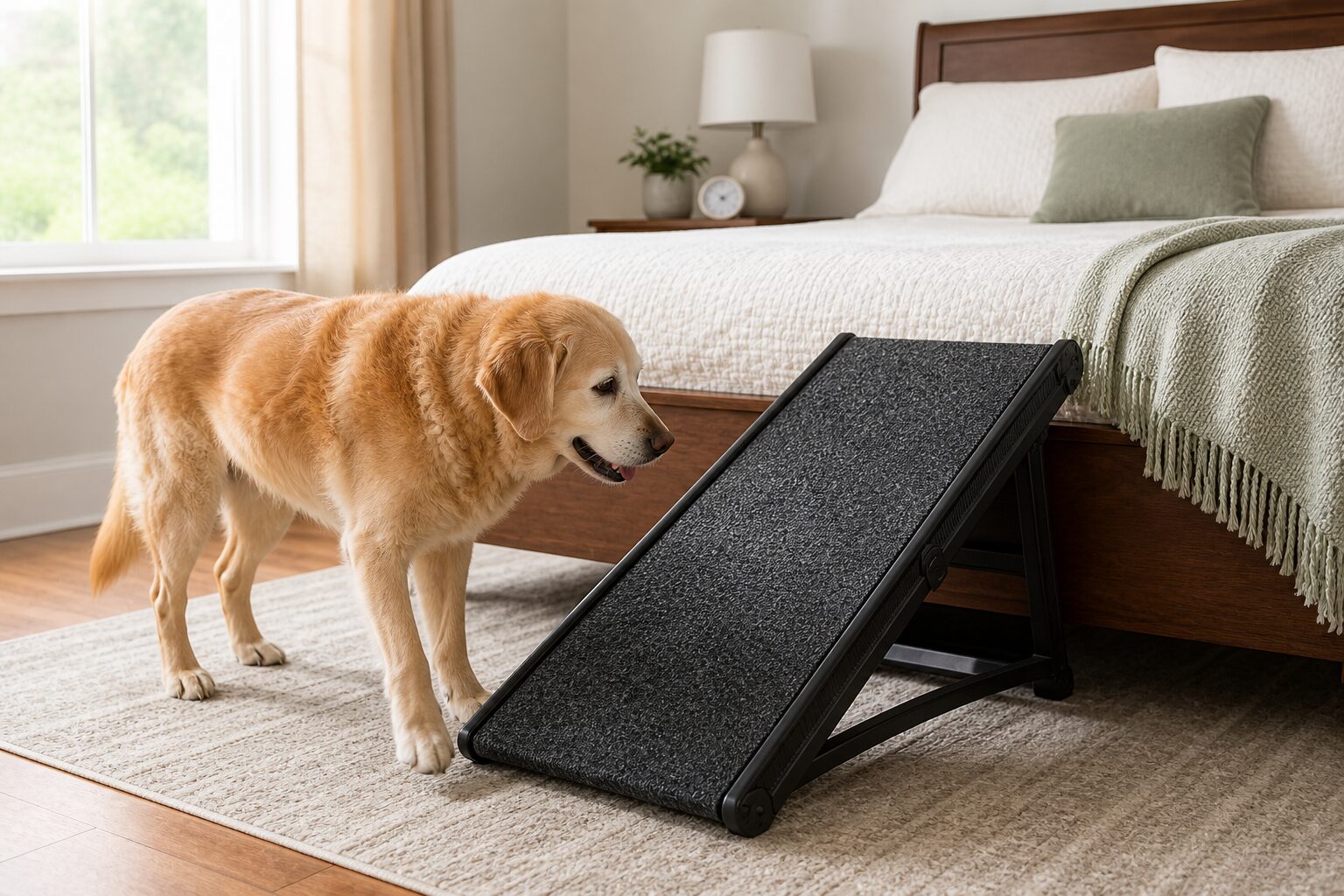
For bed access, the ramp should not be too steep. A longer ramp usually creates a gentler incline, but it also takes up more floor space. The walking surface should offer good grip so your dog does not slide while going up or down.
A ramp may be worth considering if:
- Your dog avoids stairs
- Your dog is large or heavy
- Your dog has trouble lifting their legs high
- Your bed is fairly high
- You want to reduce jumping as much as possible
Introduce the ramp slowly. Let your dog sniff it first, then encourage short practice sessions with calm praise. Some dogs need time before they trust a new surface.
Step 4: Use Stairs Only When Appropriate
Dog stairs can work well for some older dogs, especially small dogs that are still comfortable stepping up and down. They often take up less floor space than ramps, which can make them practical for smaller bedrooms.
However, stairs are not right for every senior dog. If the steps are too tall, narrow, slippery, or steep, your dog may struggle. Dogs with poor balance or weak back legs may find stairs harder than a ramp.
Stairs may be a reasonable option if:
- Your dog is small and still climbs comfortably
- The bed is not extremely high
- The steps are low and wide enough
- The surface has good grip
- Your dog already uses steps confidently
If your dog rushes down stairs, skips steps, or hesitates at the top, a ramp or lower sleeping area may be a better direction.
Step 5: Add Non-Slip Support Around the Bed
Non-slip support is one of the simplest ways to make the bedroom safer for an older dog. Even if you choose a ramp or stairs, your dog still needs secure footing before and after using them.
Consider placing non-slip rugs or runners:
- Beside the bed
- At the bottom of a ramp
- At the bottom of dog stairs
- Along the path from the door to the bed
- Near your dog’s usual sleeping area
Choose rugs that stay flat and do not slide around. A rug that bunches up can create a new problem. If needed, use a proper non-slip rug pad underneath.
Some owners also look at paw grips or traction products. These may help some dogs feel steadier on hard floors, but comfort and fit can vary, so introduce them carefully.
Step 6: Lower the Bed or Create a Safer Resting Area
Sometimes the safest option is to change the environment instead of asking your dog to keep reaching a high bed. If your bed is very tall, even a ramp may need a lot of space to create a gentle incline.
You may want to consider:
- Using a lower bed frame
- Removing a tall box spring if practical
- Creating a cozy dog bed next to your bed
- Adding a soft resting area in the bedroom
- Using a baby gate or barrier if your dog jumps down unsafely at night
For some senior dogs, sleeping beside the bed may be more comfortable than climbing onto it. This can still let them stay close to you without needing to jump.
Step 7: Consider an Orthopedic Bed Nearby
An orthopedic dog bed near your own bed can be a helpful alternative, especially if your dog is having more trouble getting up and down at night.
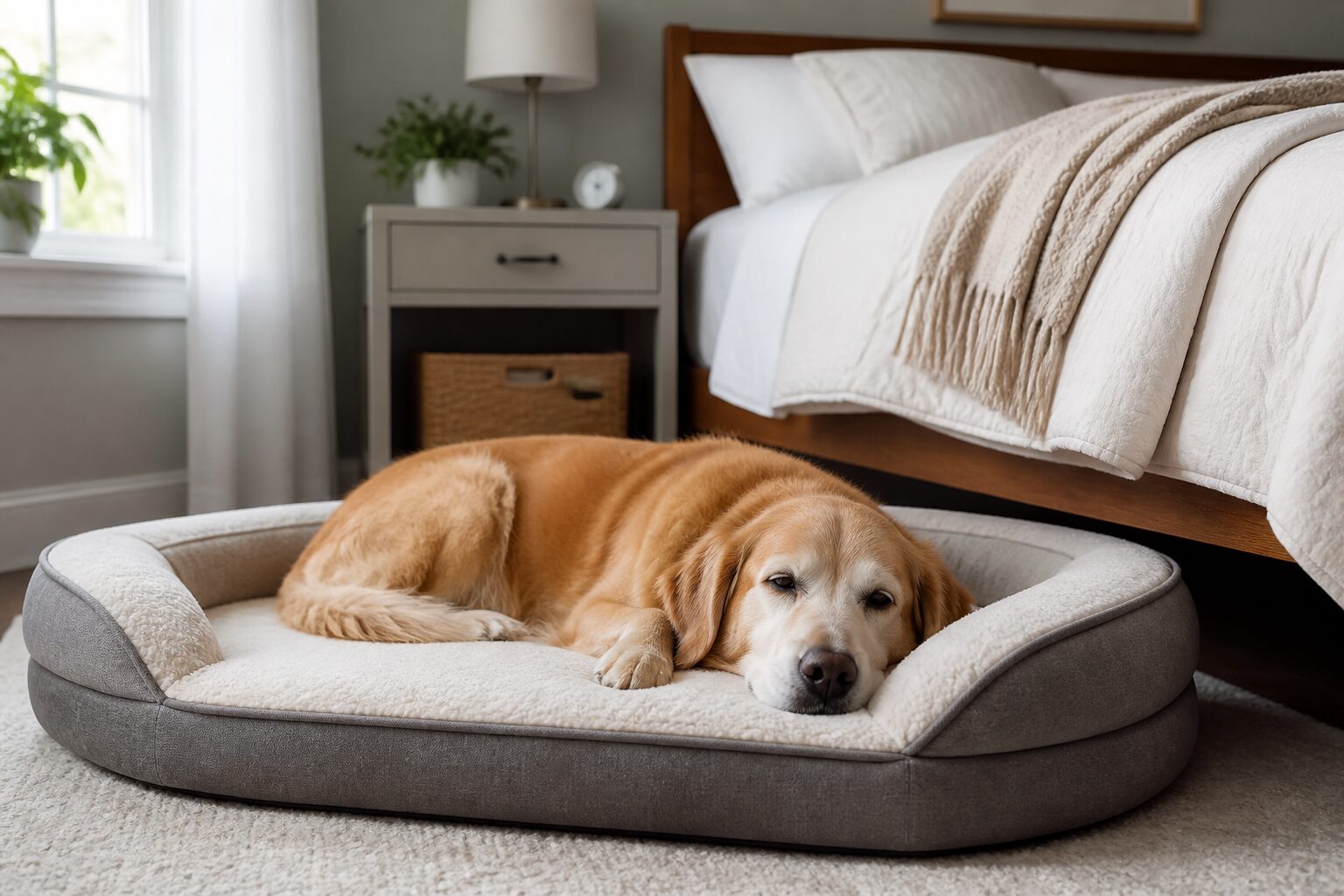
Look for a bed that is easy for your dog to enter, large enough for their sleeping position, and simple to clean. Some older dogs prefer a flat mattress-style bed, while others like a bolster for leaning or resting their head.
An orthopedic bed may be useful if:
- Your dog sleeps more than before
- Your dog seems stiff after resting
- Your dog has trouble settling on thin bedding
- You want a lower, easier resting spot near your bed
Use careful wording when thinking about comfort. A supportive bed may be more comfortable for some older dogs, but it should not be presented as a replacement for veterinary guidance when pain or sudden mobility changes are present.
What Not to Do
When your old dog cannot get on the bed, it is natural to want a quick answer. But some approaches can make the situation more stressful.
- Do not force your dog to use a ramp or stairs before they are comfortable.
- Do not encourage repeated jumping if your dog is already struggling.
- Do not use unstable boxes, chairs, or slippery objects as makeshift steps.
- Do not assume hesitation is stubbornness.
- Do not ignore sudden changes in movement, balance, or confidence.
Older dogs often need patience. A slow introduction to new gear is usually better than rushing.
When to Talk to a Veterinarian
Speak with your veterinarian if your dog’s difficulty getting on the bed is sudden, severe, or paired with other signs of discomfort. This is especially important if your dog is limping, falling, crying out, refusing stairs, moving differently, or no longer enjoying normal activities.
You should also ask your vet for guidance if your dog has a known mobility condition, is recovering from an injury, or seems uncomfortable after using stairs or a ramp.
A veterinarian can help you understand whether your dog needs a different home setup, activity changes, or a closer look at what is causing the change.
Gear That May Help
You do not need to buy everything at once. Start with the biggest problem in your dog’s environment and choose gear that matches that need.
- Dog ramp: May make bed access easier when a gentle incline is better than steps.
- Dog stairs: May work for small senior dogs that still climb confidently.
- Non-slip rugs: Help create steadier footing around the bed.
- Paw grips: May help some dogs on hard floors, depending on comfort and fit.
- Orthopedic dog bed: Offers a lower resting option near your bed.
- Support harness: May help owners guide dogs during short transitions, depending on the dog’s needs.
For product-specific buying advice, see the related guides below.
FAQ
Is a ramp or stairs better for an old dog that cannot get on the bed?
It depends on your dog’s size, confidence, balance, and the height of the bed. A ramp may be easier for dogs that struggle with steps, while stairs may work for small dogs that still climb comfortably.
Should I keep lifting my old dog onto the bed?
Occasional lifting may be necessary, but it is worth creating a safer long-term setup. If your dog is heavy or uncomfortable being lifted, a ramp, lower bed, or nearby dog bed may be more practical.
Why did my dog suddenly stop jumping on the bed?
A sudden change can happen for many reasons, including discomfort, fear after slipping, weakness, vision changes, or another health concern. If the change is sudden or your dog seems uncomfortable, contact your veterinarian.
Are dog stairs safe for senior dogs?
Dog stairs can be suitable for some senior dogs, especially small dogs that are steady and confident. They may not be ideal for dogs with poor balance, weakness, or hesitation on steps.
How can I make the floor near the bed safer?
Add non-slip rugs or runners around the bed and at the bottom of any ramp or stairs. Make sure rugs stay flat and do not slide.
Senior Dog Bed-Access Checklist
- Check whether your dog struggles more going up, going down, or both.
- Measure the height of your bed before choosing gear.
- Add non-slip support around the bed.
- Consider a ramp for a gentler incline.
- Use stairs only if your dog can climb them comfortably.
- Create a lower resting area if the bed is too high.
- Watch for signs of pain, limping, falling, or sudden behavior changes.
- Speak with your veterinarian if you are unsure what is safe for your dog.
Related Guides
- Dog Ramp vs Dog Stairs
- Best Dog Ramps for Senior Dogs
- Senior Dog Mobility Checklist
- Best Dog Stairs for Small Senior Dogs
- Best Orthopedic Dog Beds for Senior Dogs
- dog lift harness for older dogs
- stair treads for dogs
- dog gates to block stairs
Final Thoughts
If your old dog cannot get on the bed anymore, the best response is calm, practical, and patient. Start by reducing big jumps, improving traction, and choosing access gear that matches your dog’s size and confidence.
For some dogs, a ramp will make the most sense. For others, low, stable stairs may be enough. And for many senior dogs, a comfortable bed nearby can be the simplest way to keep them close without asking them to climb.
Most importantly, pay attention to sudden changes. If your dog seems painful, unsteady, or unusually hesitant, talk with your veterinarian before relying on home gear alone.