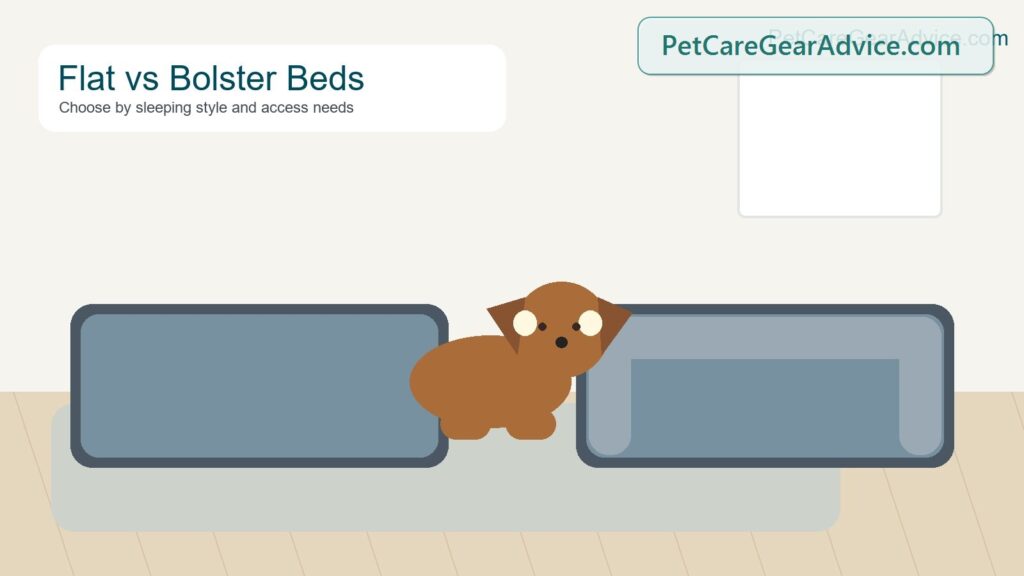
Flat dog beds and bolster dog beds can both work for older dogs, but they solve different problems. A flat bed may be easier to step onto. A bolster bed may feel cozier for dogs that like to curl up or rest their head against something. The right choice depends on your dog’s mobility, sleeping style, size, cleaning needs, and where the bed will sit in your home.
This comparison explains the practical differences without pushing one style for every dog.
Safety note: This article is for general informational purposes only and is not veterinary advice. If your dog is suddenly struggling to stand, falling, limping, crying out, or avoiding normal movement, consider speaking with your veterinarian.
Short Answer
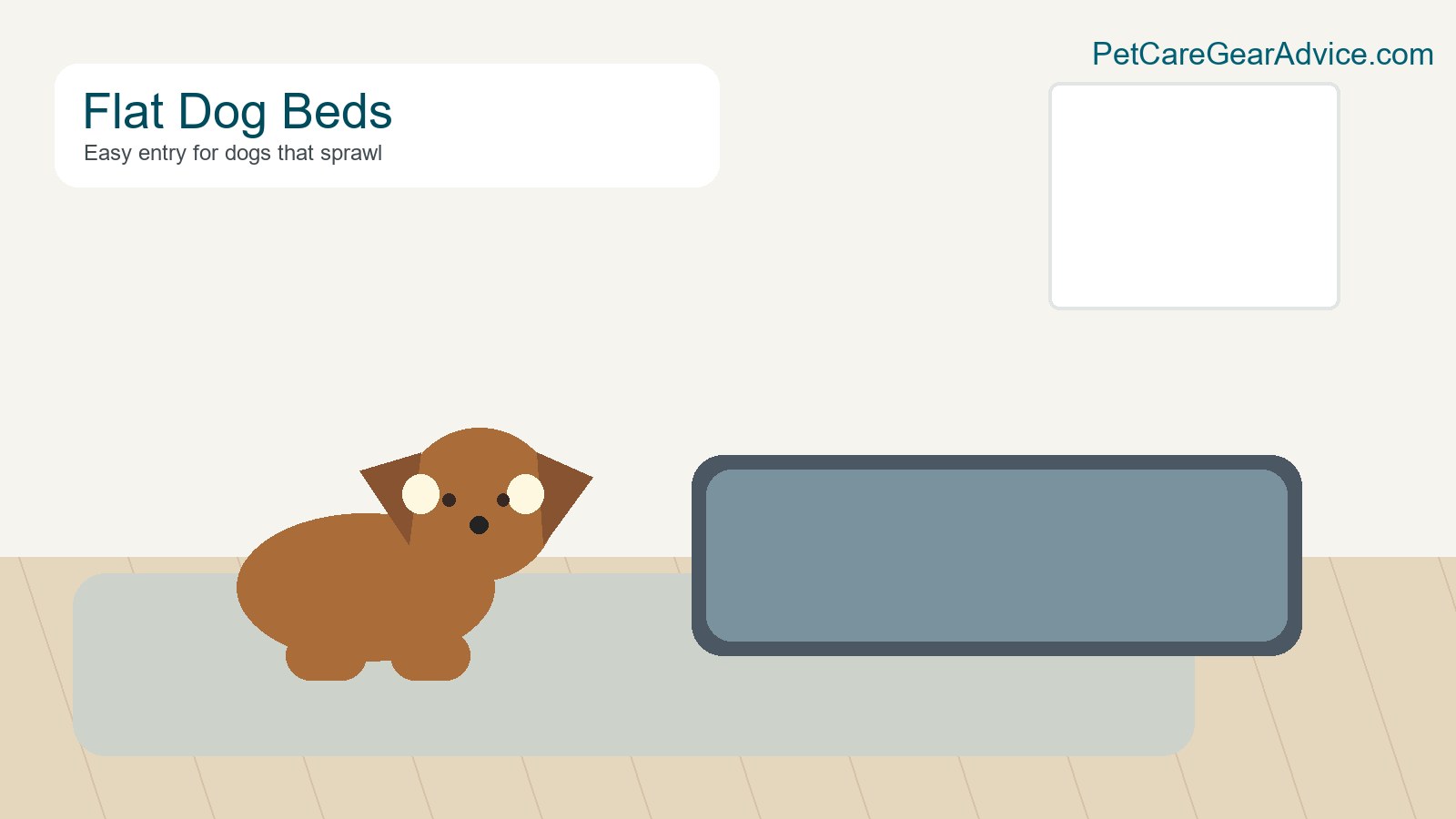
A flat dog bed is often easier for older dogs that need simple entry, more open sleeping space, or room to stretch out. A bolster dog bed may be a better fit for dogs that curl up, like leaning against an edge, or feel more settled with a side to rest against.
For many senior dogs, the best middle ground is a low-entry bolster bed: supportive sides on part of the bed, but an open front that is easier to step into.
Key Differences Between Flat and Bolster Dog Beds
| Factor | Flat Dog Bed | Bolster Dog Bed |
|---|---|---|
| Entry access | Usually easier | Depends on side height |
| Sleeping space | More open | More enclosed |
| Best for | Dogs that sprawl | Dogs that curl or lean |
| Cleaning | Often simpler | May have more seams and edges |
| Room fit | Flexible | Can feel more like a sofa bed |
When a Flat Dog Bed May Be Better
A flat dog bed is a simple mattress-style bed without raised sides. For older dogs, this can be useful because there is no edge to step over. It also gives your dog more open space to turn around, stretch out, or change position during the night.
For Dogs That Sprawl Out
If your dog sleeps on their side with legs extended, a flat bed may be easier to use than a bed with high bolsters. The open surface gives your dog room to settle without being boxed in.
For Dogs That Need Easy Entry
A flat bed may also be more practical for dogs that drag a paw, hesitate at raised edges, or have trouble stepping into deep beds. If your dog already struggles with bed access, you may also want to review our guide on helping an old dog get on the bed safely.
When a Bolster Dog Bed May Be Better
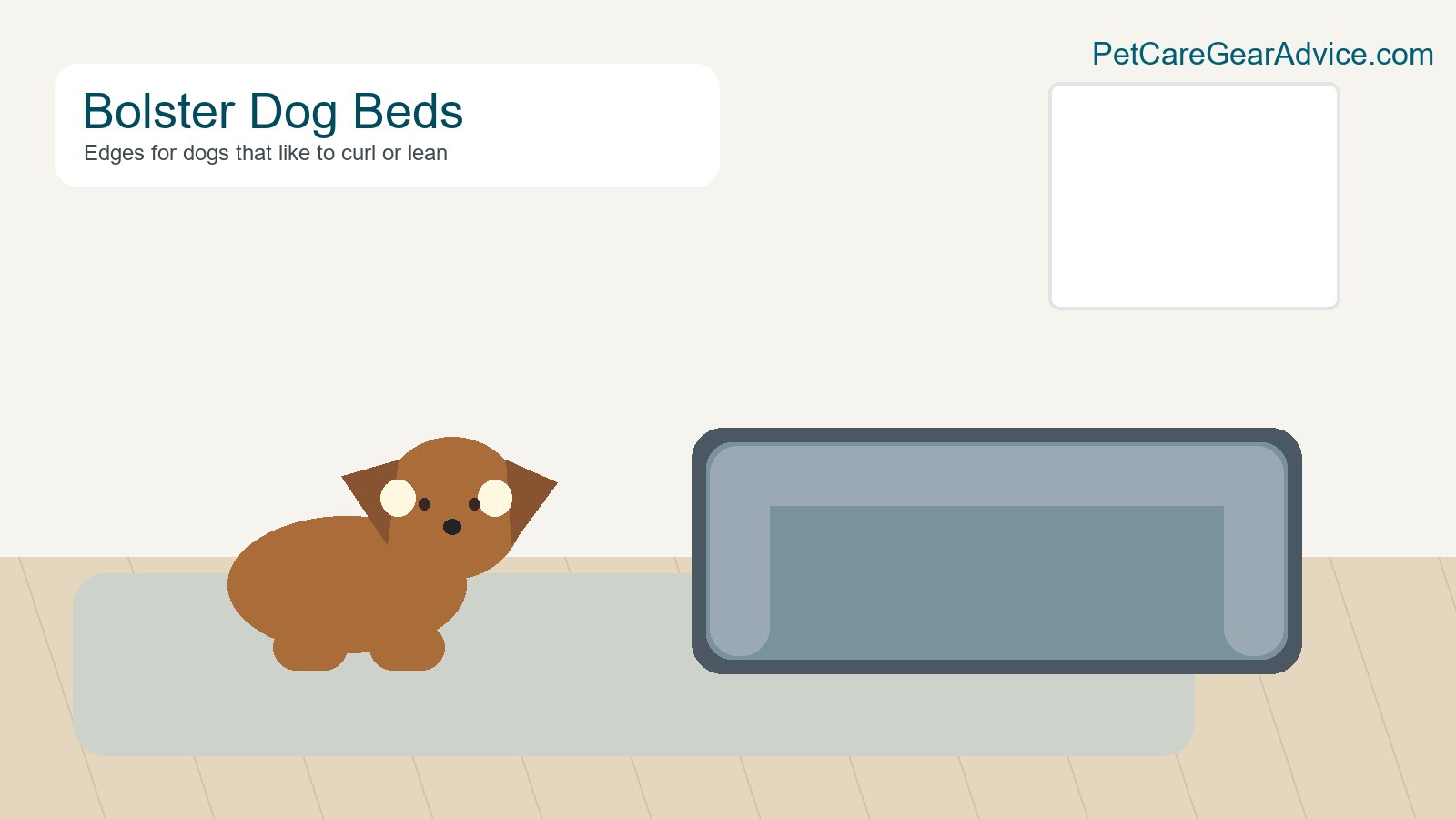
A bolster bed has raised edges on one or more sides. Some dogs like this because it gives them a place to rest their head, lean their back, or curl into a more protected shape.
For Dogs That Curl Up
If your older dog naturally sleeps curled into a ball, a bolster bed may feel more familiar. The raised edge can help define the sleeping area and give your dog something to nest against.
For Dogs That Like Head or Back Support
Some dogs enjoy resting their head on a raised side. Others like leaning their back against an edge. A bolster may be more comfortable for these habits, as long as the bed is still easy to enter.
Which Is Easier for Older Dogs to Get Into?
Flat beds usually win on entry access because there is no raised edge. However, not all bolster beds are difficult. A low-entry bolster bed with an open front can work well for dogs that like edges but need an easier way in.
Avoid tall, full-surround bolsters if your dog struggles to step over raised sides. The bed may look cozy, but it can become frustrating if your dog avoids it.
Which Is Easier to Clean?
Flat beds are often simpler to clean because they may have fewer seams and less shaped padding. Bolster beds can still be easy to maintain if the cover is removable and machine washable, but cleaning can be more involved around corners and side cushions.
For older dogs that shed heavily, drool, or have occasional accidents, look for clear washing instructions and consider whether the foam is protected by a waterproof liner.
Which Is Better for Large Senior Dogs?
Large senior dogs often need enough room to stretch and enough surface area to distribute their weight comfortably. A flat mattress-style bed may work well if your dog sprawls out. A large bolster bed may work if the entry side is low and the sleeping area is not too cramped.
Before buying any large bed, check the actual sleeping surface dimensions, not just the outer dimensions. Bolsters can reduce usable sleeping space.
Which Is Better for Dogs With Accidents?
If your older dog has occasional accidents, cleaning may matter more than bed shape. A removable washable cover and a waterproof liner may be more important than whether the bed is flat or bolstered.
If accidents are new, frequent, or paired with behavior changes, consider speaking with your veterinarian.
Decision Table: Flat vs Bolster Bed
| Your Dog’s Need | Better Starting Point | Why |
|---|---|---|
| Easy entry | Flat bed | No raised edge to step over |
| Sprawling sleep style | Flat bed | More open space |
| Curling up | Bolster bed | Edges can feel cozy |
| Likes head rest | Bolster bed | Raised side gives a place to lean |
| Accidents or mess | Either | Prioritize washable cover and liner |
| Large older dog | Depends | Check usable sleeping area and entry height |
What to Avoid
- Choosing a tall bolster bed for a dog that already struggles with entry
- Buying based only on outer dimensions
- Assuming every senior dog needs the same bed shape
- Using medical claims as a buying shortcut
- Ignoring cleaning and cover removal
How This Connects to Other Senior Dog Gear
The bed is only one part of a comfortable senior dog setup. If your dog has trouble moving around the bedroom, you may also want to think about floor traction, bed access, and nighttime walking paths. Our senior dog mobility checklist can help you review the broader home setup.
Related Guides
- Best Waterproof Dog Beds for Older Dogs
- How to Choose a Dog Bed for an Older Dog
- Best Orthopedic Dog Beds for Senior Dogs
- How to Help an Old Dog Get on the Bed Safely
- Senior Dog Mobility Checklist
- Best Non-Slip Rugs for Older Dogs
- washable flat and bolster dog beds
Final Recommendation
Choose a flat bed if your older dog needs the easiest entry, sleeps stretched out, or dislikes being boxed in. Choose a bolster bed if your dog curls up, likes leaning against an edge, or uses a raised side as a headrest. For many senior dogs, a low-entry bolster bed offers a practical balance.