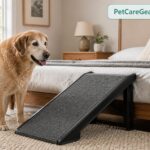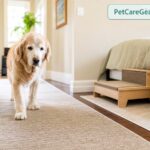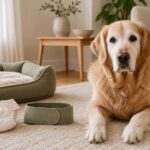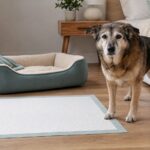
A safer feeding station is not a special product. It is a small, predictable zone where an older dog can reach food and water, stand comfortably, turn without bumping obstacles, and leave without crossing a wet or slippery patch. The best setup starts with observation, not a shopping list.
1. Observe One Normal Meal
Watch from the side and behind without moving the bowls. Note the route, stance, head position, paw placement, and whether the bowl moves. Look for hesitation at floor transitions, wide bracing, repeated repositioning, coughing, food dropping, or stopping early. A short video can help your veterinarian evaluate a new problem.
2. Choose a Familiar, Low-Traffic Location
Keep the station away from stairs, swinging doors, appliance cords, and busy household paths. A dog with hearing or vision changes may startle when approached from behind, so leave enough open space for people to pass without crowding. Consistency helps the dog find water at night.
3. Create a Stable Route
The final few feet should be as dependable as the bowl itself. Remove loose towels and curled mats. If the existing floor is difficult, compare stable, low-edge options in our guide to non-slip rugs for older dogs. The broader senior dog mobility checklist can help identify problems elsewhere in the route.
4. Match Bowl Size and Shape
Use the current comfortable bowl as a measurement baseline. Check top diameter, depth, normal serving volume, and how far the dog must place the muzzle inside. A wide bowl may suit a broad muzzle or long ears; a very deep bowl can be awkward. Test any non-slip bowl on the actual floor rather than relying on the label alone.
5. Treat Height as an Individual Decision
Raised bowls are not automatically better for older dogs and should not be promoted as a way to prevent bloat or improve digestion. Some dogs may appear more comfortable with a modest height change, while others need floor-level access. Discuss pain, swallowing, or posture concerns with your veterinarian before changing height for a medical reason.
6. Contain Drips Without Creating an Edge
A bowl mat should fit the bowls with a small margin and lie fully flat. Keep raised lips and corners out of the dog’s stepping line. Lift the mat daily, dry underneath, and clean splashes before they become a slick film. For larger cleanup zones, see washable pee pads for senior dogs, but do not layer loose materials.
7. Improve Lighting and Contrast
Soft, even lighting can help a dog distinguish the station from the floor. Contrast between bowl, mat, and flooring may be more useful than a decorative pattern. Avoid glare from polished metal or a bright lamp directly in the dog’s eyes.
8. Keep Water Available During Any Change
Introduce a new bowl or fountain beside the familiar water source. Monitor actual use rather than assuming moving water increases intake. If thirst suddenly increases or decreases, or if the dog coughs or struggles while drinking, contact your veterinarian.
9. Make Cleaning Easy Enough to Repeat
Choose a routine the household can maintain: daily bowl washing, fresh water, wiped floors, and regular inspection under mats. Store supplies nearby but outside the dog’s route. Predictable maintenance is more valuable than a complicated station that is rarely disassembled.
A Five-Minute Safety Check
- Walk the route at the dog’s pace and look for sliding or narrow turns.
- Press each bowl and mat from several directions.
- Confirm water is visible and reachable.
- Check that the dog can approach and leave without backing into furniture.
- Dry the floor and look beneath every mat.
Frequently Asked Questions
Should an older dog’s bowls be raised?
Not automatically. Comfort, diagnosis, body size, and swallowing safety matter. Ask your veterinarian before using height to address pain or a medical concern.
How far should food and water be from the bed?
Close enough for convenient access but not so close that spills wet bedding or bowls block the standing area. Preserve a clear route between them.
What if my dog slips only while eating?
Record the stance and discuss new weakness or pain with your veterinarian. Also inspect the route and use the mobility checklist rather than treating the bowl as the only cause.
Related Senior Dog Guides
- Senior Dog Mobility Checklist
- Best Non-Slip Rugs for Older Dogs
- Best Non-Slip Stair Treads for Older Dogs
- Best Washable Pee Pads for Senior Dogs
- How to Choose a Dog Bed for an Older Dog
- Raised vs Floor Dog Bowls for Senior Dogs
Final Thoughts
Build the station around a clear route, a comfortable bowl, reliable water access, and cleaning you can sustain. Change one element at a time and watch the dog use it. The goal is not a perfect-looking corner; it is a predictable daily routine that does not introduce a new obstacle.