Choosing a bed for an older dog is not only about finding something soft. As dogs age, the way they rest, stand up, turn around, and get comfortable can change. A bed that worked well a few years ago may become harder to use if the sides are too high, the cover is difficult to clean, or the sleeping surface no longer suits your dog’s routine.
This guide explains how to think through the most practical details before buying a senior dog bed: entry height, sleeping style, support, washable covers, waterproof liners, room placement, and when to ask your veterinarian for guidance.
Safety note: This article is for general informational purposes only and is not veterinary advice. If your dog is limping, falling, crying out, suddenly struggling to stand, having new accidents, or showing signs of discomfort, consider speaking with your veterinarian.
Why Older Dogs May Need a Different Bed
Older dogs often spend more time resting, but rest is not always simple. Some dogs become more careful when stepping over raised edges. Some need more room to stretch out. Others prefer to lean against a side bolster because it gives them a comfortable place to rest their head or back.
The best bed for an older dog depends on your dog’s size, sleeping position, mobility, cleaning needs, and where the bed will sit in your home. A large senior dog that sprawls out may need a different setup than a small dog that curls into a tight ball beside your bed.
Start With Your Dog’s Mobility and Sleeping Style
Before comparing bed types, watch how your dog sleeps and how they get up from their current bed. This can tell you more than a product description.
If Your Dog Sprawls Out
Dogs that sleep stretched out often do better with a flat mattress-style bed or a bed with a large open surface. A bed with tall bolsters on every side may feel restrictive if your dog likes to extend their legs.
If Your Dog Curls Up
Dogs that curl up may enjoy a bolster or sofa-style bed because it gives them an edge to lean against. The key is making sure at least one side is easy to enter.
If Your Dog Has Trouble Stepping Over Edges
If your dog drags a paw, hesitates before stepping into bed, or avoids high-sided beds, look for a low-entry design. A lower front edge may make the bed easier to use than a full-surround bolster.
Check Bed Height and Entry Access
For senior dogs, entry height matters. A bed can look cozy but still be frustrating if your dog has to step over a tall edge every time they want to lie down. This is especially important for short-legged dogs, large dogs, and dogs that are less confident with stepping up.
Look for beds with a low front opening, a flat mattress profile, or a bolster shape that leaves one side open. If your dog already struggles to reach your bed or couch, you may also want to read our guide on how to help an old dog get on the bed safely.
Think About Support Without Making Medical Claims
Many senior dog beds use words like orthopedic, memory foam, egg-crate foam, or supportive foam. These features may be more comfortable for some older dogs, but they should not be treated as a medical solution.
Instead of asking whether a bed can solve a health issue, ask practical questions:
- Is the sleeping surface thick enough for your dog’s size?
- Does the bed stay flat instead of collapsing at the center?
- Can your dog stand up from it without sinking too deeply?
- Is the bed large enough for your dog’s normal sleeping position?
- Is the cover easy to remove and wash?
For product-specific options, see our existing guide to orthopedic dog beds for senior dogs.
Choose a Shape: Flat, Bolster, Sofa-Style, or Low-Entry
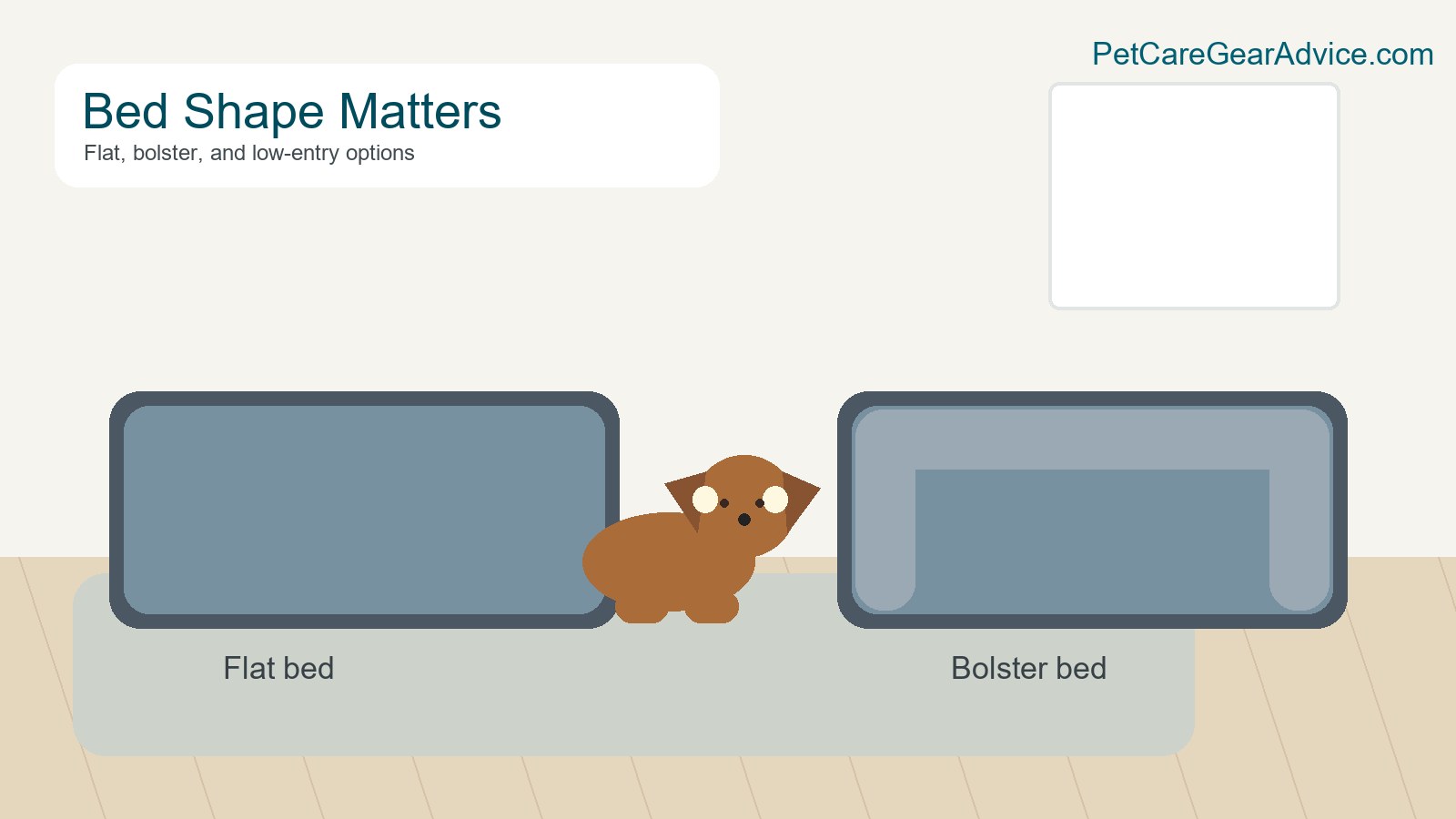
Bed shape affects how easy the bed is to use. A flat bed is usually easier to step onto and gives dogs more open space. A bolster bed may feel cozier for dogs that like to curl up or lean against something. Sofa-style beds can be comfortable, but the side height should match your dog’s mobility.
There is no single best shape for every older dog. The better question is: which shape matches your dog’s habits without making entry harder?
Think About Cleaning, Covers, and Waterproof Protection
Cleaning becomes more important as dogs age. Some older dogs shed more, track in dirt, drool, or have occasional accidents. A removable washable cover can make everyday care easier.
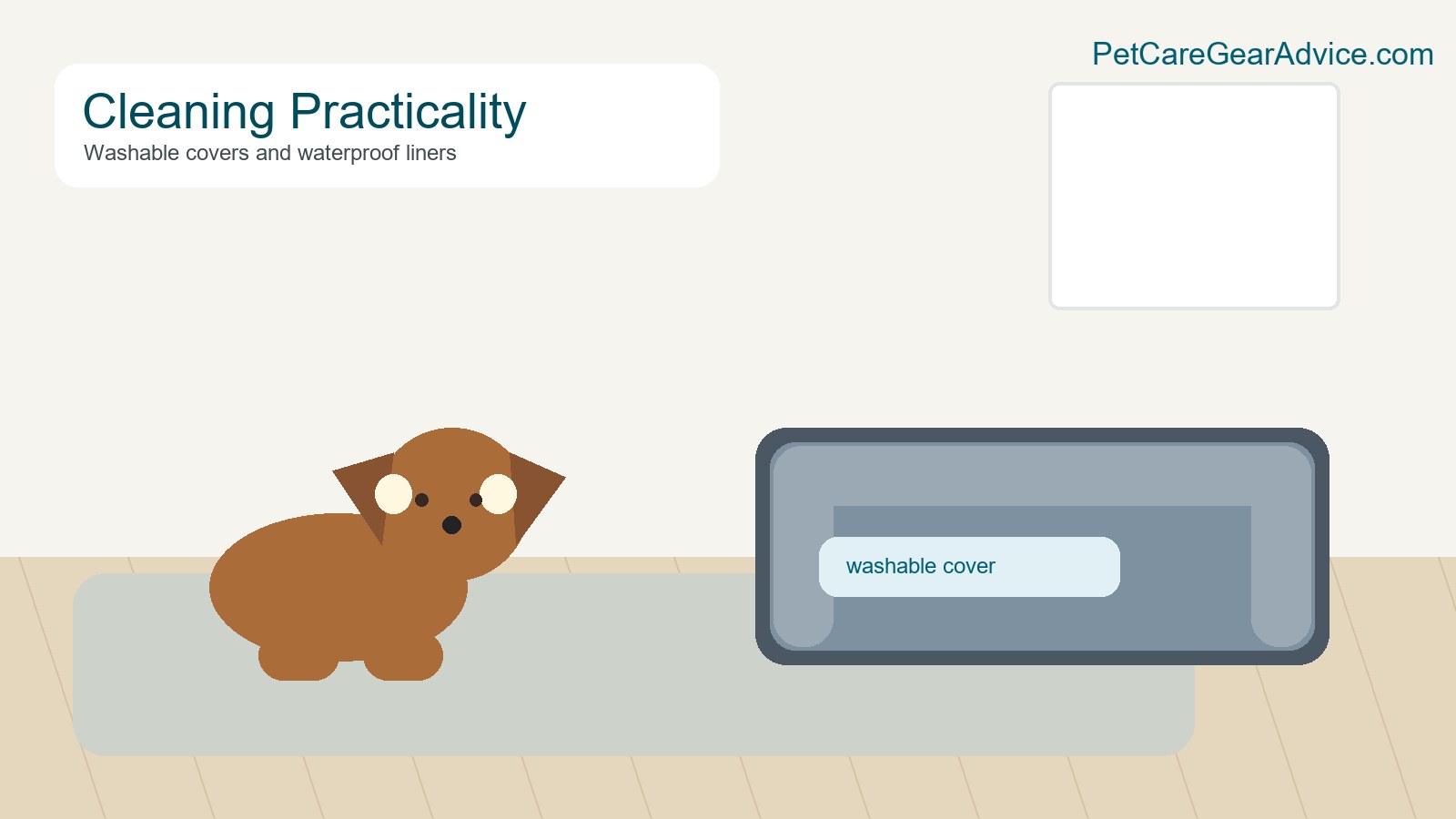
Waterproof protection is another detail to check carefully. Some beds have a water-resistant outer cover, while others include a waterproof inner liner that helps protect the foam. These are not the same thing. Before buying, verify exactly which part of the bed is washable and which part is waterproof or water-resistant.
Match the Bed to Your Dog’s Size and Room Setup
A senior dog bed should fit both your dog and the room. Measure your dog while they are lying in their normal sleeping position. Then check the bed dimensions carefully. For large dogs, a bed that is too small can make it harder to settle comfortably.
Placement also matters. Put the bed where your dog can reach it without slipping, squeezing through tight spaces, or stepping onto hard floors. If your dog slips around the bedroom or hallway, our guide to non-slip rugs for older dogs may help you think through safer footing.
What to Avoid When Choosing a Senior Dog Bed
- A bed that is too small for your dog’s real sleeping position
- Tall bolsters on every side if your dog struggles to step over edges
- Covers that are difficult to remove or wash
- Vague waterproof claims that do not explain whether the cover or liner is protected
- Thin beds that flatten quickly under a large dog
- Any product that makes exaggerated health claims
When to Talk to Your Veterinarian
If your dog suddenly avoids their bed, has trouble standing, cries out, falls, or has new accidents, it is worth speaking with your veterinarian. A bed may make daily rest more comfortable, but sudden changes can point to something that needs professional attention.
Senior Dog Bed Selection Checklist
- Watch your dog’s normal sleeping position.
- Check whether your dog needs a low-entry bed.
- Measure your dog before choosing a size.
- Decide whether a flat or bolster shape fits your dog’s habits.
- Look for a removable washable cover.
- Verify waterproof liner or water-resistant cover claims.
- Place the bed on a non-slip surface.
- Avoid medical claims and choose based on practical needs.
Related Guides
- Best Waterproof Dog Beds for Older Dogs
- Flat vs Bolster Dog Beds for Older Dogs
- Best Orthopedic Dog Beds for Senior Dogs
- How to Help an Old Dog Get on the Bed Safely
- Senior Dog Mobility Checklist
- Best Non-Slip Rugs for Older Dogs
- washable dog beds for senior dogs
Final Thoughts
The right bed for an older dog is the one your dog can use comfortably and safely in your actual home. Start with access, size, sleeping style, and cleaning needs. Then use product features like foam type, bolsters, washable covers, and waterproof liners to narrow your choices.