Dog boots can shield paws from hot pavement, snow, salt, rough ground, or damp surfaces, but a structured shoe also changes how a dog feels the ground. Older dogs may need more time, shorter sessions, and more frequent skin checks than the product instructions suggest.
Disclosure: As an Amazon Associate, PetCareGearAdvice.com may earn from qualifying purchases at no additional cost to you.
Quick Picks
| Pick | Format | Best use |
|---|---|---|
| Best Overall | Rugged four-boot set | Outdoor walks when paw protection and a more substantial sole are needed. |
| Best Breathable Option | Mesh boot with rubber sole | Warm-weather walks where a lighter upper is useful. |
| Best Lightweight Pick | Lightweight four-boot set | Dogs that reject heavier hiking-style boots. |
| Best Reflective Pick | Reflective rugged boot | Evening walks where visibility details are useful in addition to paw coverage. |
| Best Trail-Oriented Option | Structured outdoor boot pair | Owners who need different front and rear sizes or a structured trail boot. |
| Best Thin Disposable-Style Barrier | Pull-on rubber booties | Short outings where a flexible moisture or surface barrier is the priority. |
How We Chose These Options
We verified current Amazon US detail pages for six distinct boot formats: structured rugged boots, breathable shoes, lightweight options, reflective closures, a two-boot trail system, and thin pull-on barriers. We focused on fit and use case rather than promises of injury prevention.
- Weight-bearing paw width: The measured paw, not breed or weight, should drive sizing.
- Opening and closure: A wide opening can reduce paw handling; closures must be secure without pressure.
- Sole flexibility: The dog should be able to place the paw without fighting an overly rigid sole.
- Intended environment: Trail, heat, snow, rain, and indoor flooring call for different designs.
- Quantity per listing: Some premium boots are sold as pairs so front and rear sizes can differ.
Best Dog Boots for Senior Dogs
1. QUMY Dog Boots – Best Overall
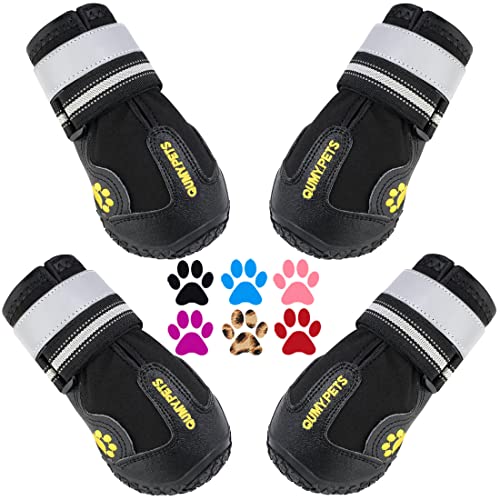
Verified variation: Size 6: 2.6”x3.0”(W*L) (Pack of 4). The verified size uses a structured sole, split opening, and two adjustable reflective straps.
Best for: Outdoor walks when paw protection and a more substantial sole are needed.
Watch for: Measure paw width while weight-bearing and introduce one or two boots before attempting a full walk.
2. SlowTon Breathable Dog Shoes – Best Breathable Option

Verified variation: #6 (Width 2.6 inch) for 52-68 lbs. This selected size combines a breathable upper, rubber sole, and two adjustable closures.
Best for: Warm-weather walks where a lighter upper is useful.
Watch for: Seller safety language is not a guarantee against slipping or injury; test on the actual surface.
3. Dimicoo Breathable Dog Boots – Best Lightweight Pick

Verified variation: L (Insole Width 2.6")for 44~66lb. The verified large variation uses a lighter upper and a flexible traction sole.
Best for: Dogs that reject heavier hiking-style boots.
Watch for: Lightweight materials may offer less structure; inspect soles and seams before every outing.
4. XSY&G Reflective Dog Boots – Best Reflective Pick
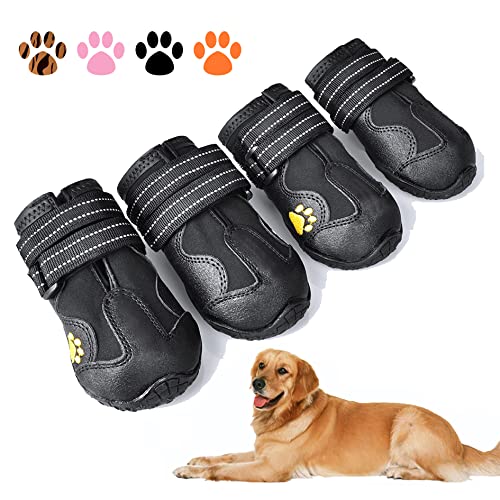
Verified variation: Size 4:(2.6”x2.1”)(L*W) for 31-40 lbs. The selected four-piece set combines a rugged sole with adjustable reflective closures.
Best for: Evening walks where visibility details are useful in addition to paw coverage.
Watch for: Reflective trim does not replace a leash, lighting, or careful route selection.
5. Ruffwear Grip Trex Dog Shoes – Best Trail-Oriented Option
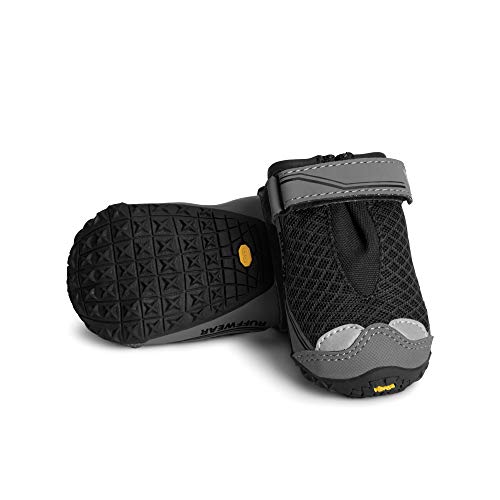
Verified variation: 2.00 in (2 Boots). The verified 2-inch variation is sold as two boots and uses a breathable upper with a rugged outdoor sole.
Best for: Owners who need different front and rear sizes or a structured trail boot.
Watch for: This ASIN is a pair, not a set of four. Measure front and rear paws separately before ordering quantities.
6. PawZ Rubber Dog Boots – Best Thin Disposable-Style Barrier

Verified variation: L. The selected large pack contains thin pull-on rubber booties rather than a padded shoe.
Best for: Short outings where a flexible moisture or surface barrier is the priority.
Watch for: The tight opening can be difficult for some senior dogs; remove promptly and inspect the skin.
Measure Front and Rear Paws Separately
Place one paw on paper while the dog stands naturally, mark the widest points, and repeat for front and rear. Add no extra room unless the size chart instructs it. Nails should be maintained because long nails change fit and pressure inside the boot.
Check the product quantity as carefully as the size. A two-boot pack can be useful when front paws are larger, but it requires ordering the correct pair for each end. A four-pack is simpler only when all paws fit the same variation.
Use a Gradual Boot Break-In
Let the dog sniff one boot, touch it to the paw, fasten it briefly, and remove it. Build toward several steps indoors before trying a short, familiar outdoor route. High stepping is common at first, but freezing, dragging, knuckling, or distress means the session should end.
After every early trial, inspect toes, nails, dewclaws, pads, and the leg above the closure. Paw gear should complement environmental changes such as stable indoor rugs and appropriate ramps for senior dogs, not substitute for them.
What to Avoid
- Using body weight as the only sizing input.
- Taking a first boot trial onto stairs or a long route.
- Leaving damp boots on after the walk.
- Assuming waterproof wording means water can never enter around the cuff.
- Claiming boots prevent falls, correct gait, or replace veterinary care.
Frequently Asked Questions
How long should a senior dog wear boots at first?
Begin with seconds or a few indoor steps, then remove and inspect. Increase only when the dog moves comfortably and the skin remains normal.
Do dogs need four boots?
Not always. The hazard, paw condition, and product format matter. Some outdoor protection uses four; some rehabilitation plans are individual and should be veterinarian-led.
Can boots help on hardwood floors?
Some soles may add grip, but a bulky outdoor boot can also alter gait. Stable floor coverings are often the more direct environmental change for indoor routes.
Related Senior Dog Guides
- Senior Dog Mobility Checklist
- Best Non-Slip Rugs for Older Dogs
- Best Non-Slip Stair Treads for Older Dogs
- Best Dog Ramps for Senior Dogs
- Best Lifting Harnesses for Senior Dogs
- Best Dog Socks for Senior Dogs
Final Thoughts
Select boots for the surface and hazard, measure every paw, and introduce the least bulky format that meets the need. Short sessions and skin checks protect the dog better than relying on a label that says non-slip, waterproof, or all-weather.